
Date:
Spring 2021
Skills Used:
CAD, 3D printing, C Programming, Soldering, Circuit Design
Design Goals
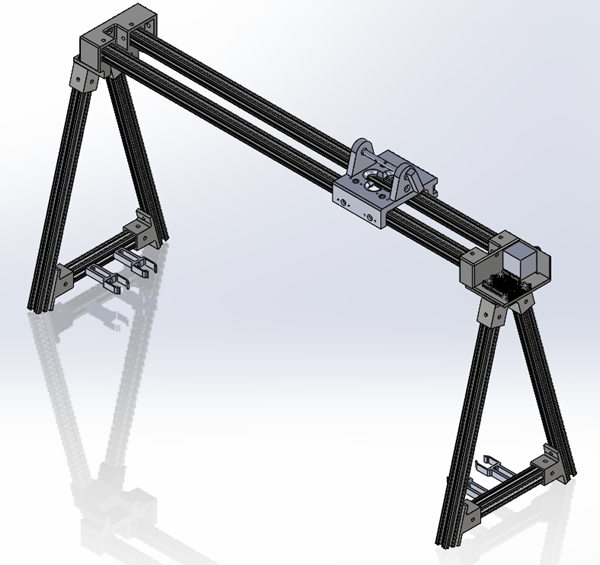
The project was to create a portable model of an overhead gantry crane for demonstrating and testing different control techniques, for use in a future class by Dr. Jackson Potter. We called it the Jolley Trolley because the workshop it was created in was in Jolley Hall. We focused on 3 main performance goals:
1. Achieve a speed of 1 ft/s
2. Achieve a weight less than 10 lbs
3. Automatically stop the gantry if it is near the edge
The crane was held together with custom 3D printed parts, and used a 3D printer belt to move a cart. The payload (a tennis ball) was attached via paracord to a 3D printed winch mechanism that could lock during operation and unlock to adjust the rope length. The trolley was driven by an Arduino, which used switches as input for direction and Hall effect sensors to detect magnets on the cart for the automatic braking.
Each of the design goals was achieved, except the 1 ft/s speed, which was limited by the power requirements of the stepper motor we selected, and we didn’t have time to order a new one.
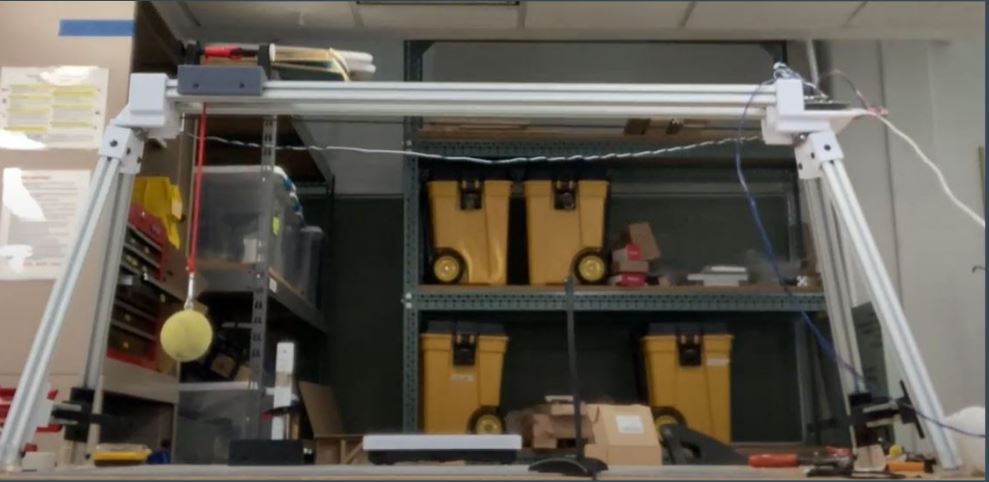
The Jolley Trolley standing up, ready to demonstrate some pendulum dynamics.
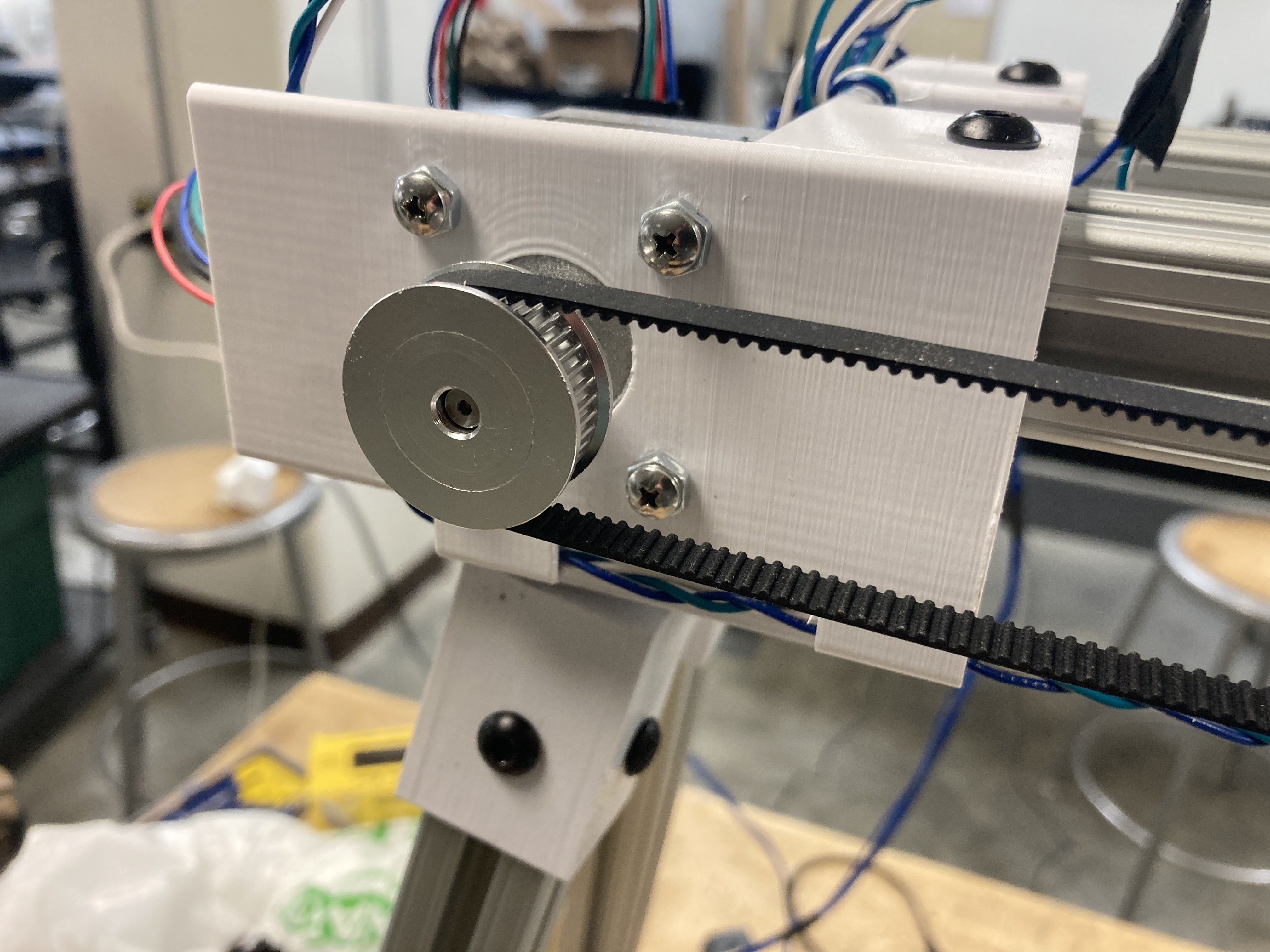
The pulley mechanism, actuated by a stepper motor for precision and speed with open loop control.
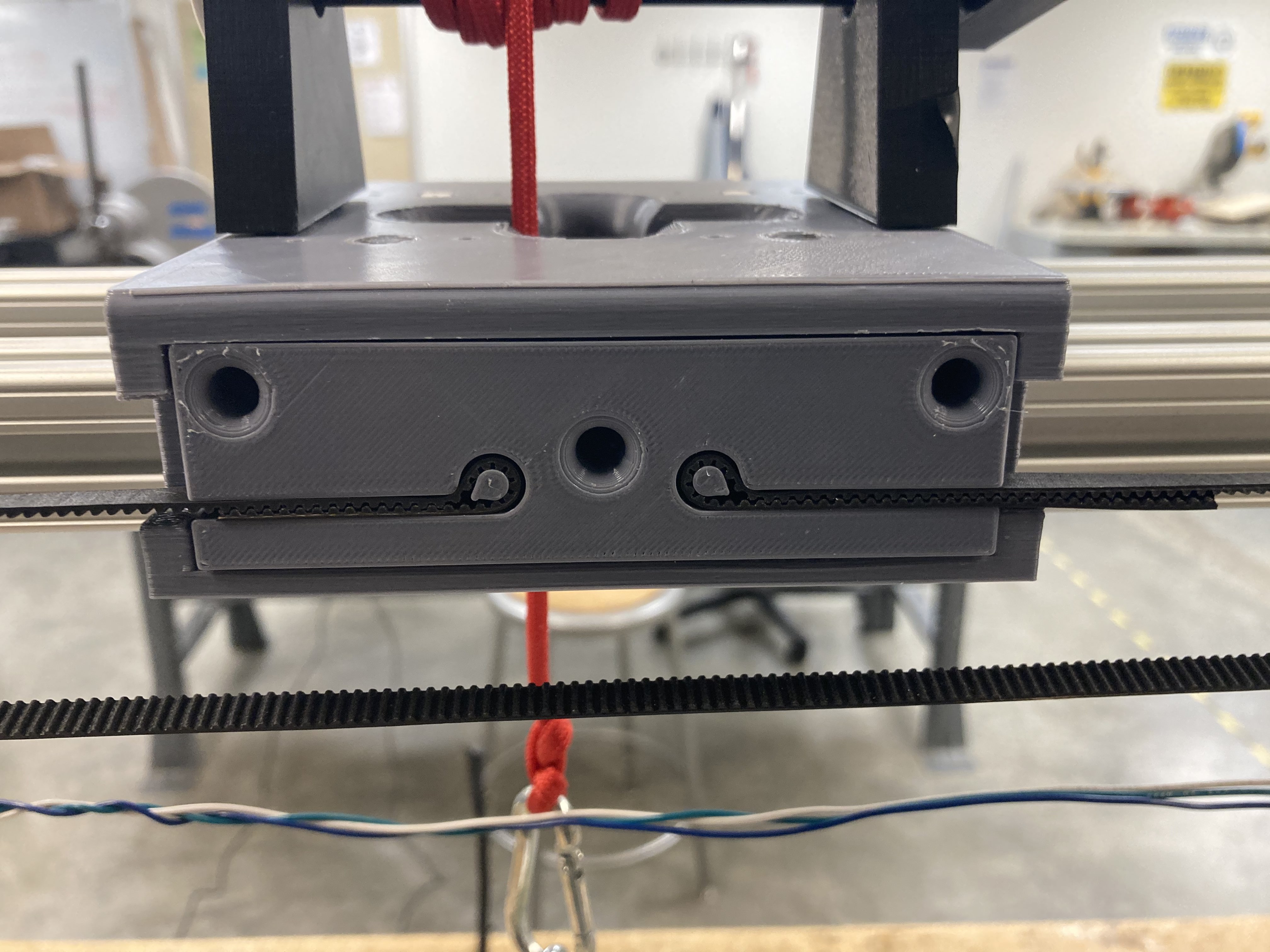
3D printer style locking mechanism for adjusting the pulley tension.
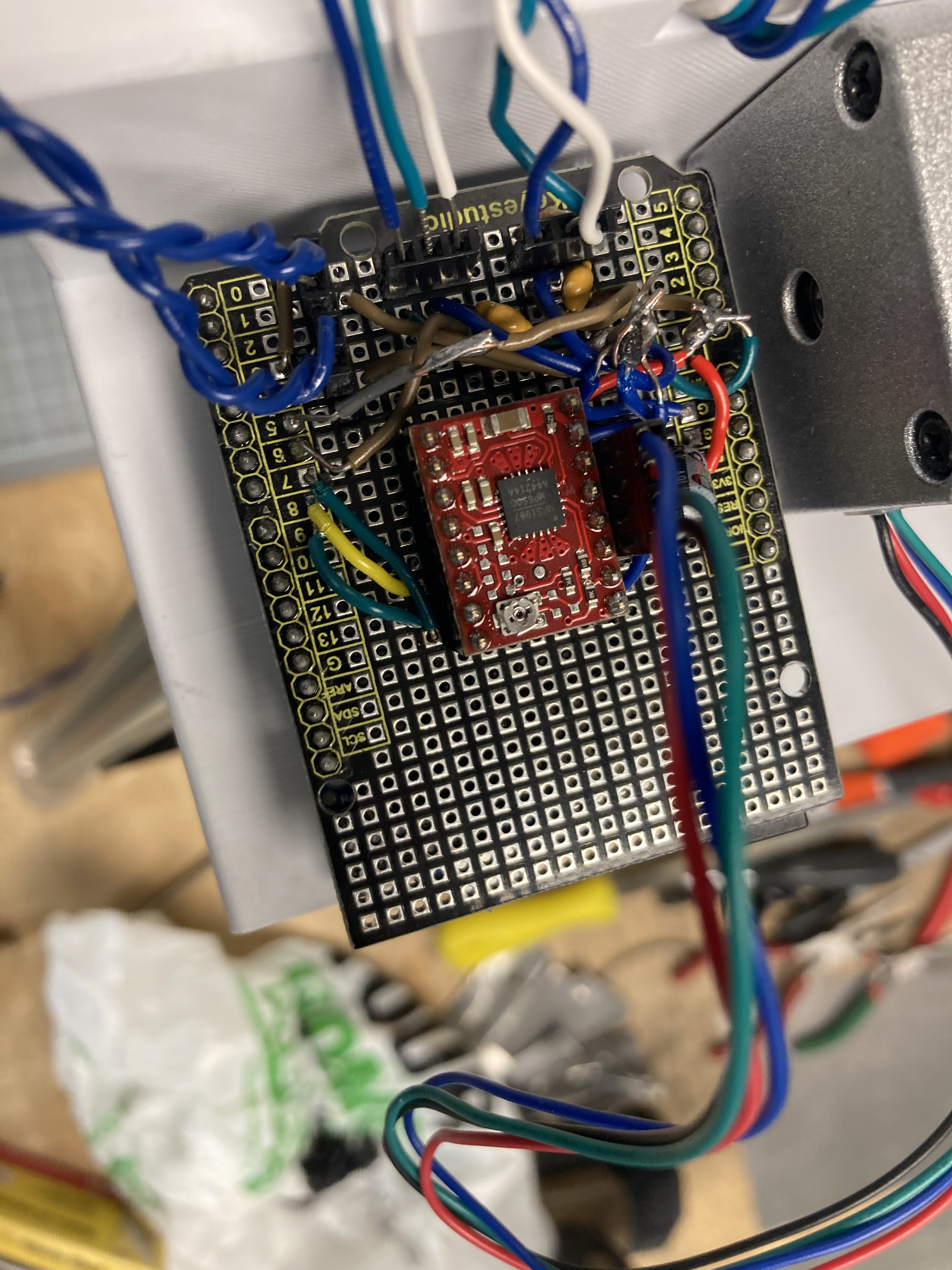
A custom Arduino Shield to connect the motor controller, switches, sensors, and motor to the arduino.
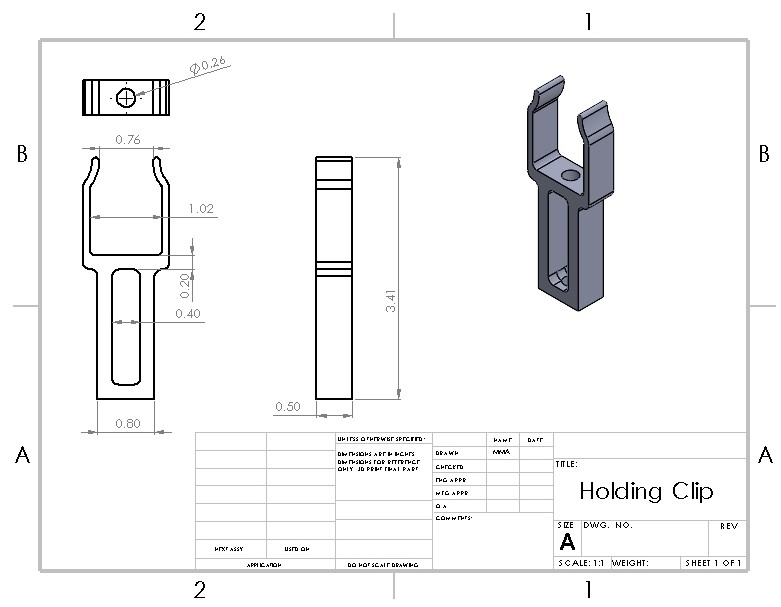
A Technical drawing on one of the parts I designed for the project, a clip that could snap onto and off of the aluminum extrusion with ease.
You can check out a video of the design process here. After this video was made, the design was improved by adding clips to the legs to hold it during transit, adding rubber pads for the feet to increase traction, improving the controller, and increasing the max speed.